Tuesday, April 1, 2008

Honey & the Honu

I was sitting on a lava outcropping focusing my camera on a sea bird when O'Ceallaigh said, "Hon, turn around and look behind you."

I turned and looked. There was a lady sitting at the edge of the beach with her feet inches above the water. Her two sons stood beside her. "What?" I said. I quickly scanned the rest of the beach and the nearby inlet. "I don't see anything." I turned back to my camera.

"Hon, look where the kids are pointing."

I looked at the lady again. Her kids were on the other side of her. I couldn't tell if they were pointing or not. I looked down the beach for signs of excitement or gathering crowds. None. "I don't see anything," I repeated and turned back to my camera. The bird, picking snails and teeny crabs from the rocks, had moved on. I folded the tripod.

"Look here, in the channel," O'Ceallaigh sounded a bit more insistent. I stood up, turned around and walked over to him. "Where?" I queried, with just the tiniest hint of impatience in my voice.

O'Ceallaigh pointed, and I saw a rock. The rock moved. I took a step closer. The rock moved again. I fumbled for my camera and tripod.


For the next half hour I sat enthralled, watching Honu graze. I attempted some video, but it was very disappointing. Only the surface of the water is visible.

My next ordeal was trying to get a good shot of the turtle's head. Turtles cannot breathe under water. Every five minutes or so they come up for air. Trouble is, they are up and down faster than my finger can move and my shutter can flash!


I didn't realize I had the above photo (enlarge) until I was home and sorting through/cataloging the over 400 shots I took on Kona. Just once I must have been a little faster with the reflexes then I thought.

The turtle swam up and down the little channel between the lava rocks. It was grazing and pretty much let the gentle waves determine where it was going to eat and which way it was going to face.


The tide was coming in, and along with it, more honu, however the deepening water made them more difficult to watch. We decided to move on in to Pu'uhonua o Honaunau National Historic Park and look at the replica of the ancient Hawaiian sacred village which was the home of generations of priests and kings. As we moved through the park we came to a sandy beach.

Approaching the beach, O'Ceallaigh -- who was reading the guide map from the visitor's center -- told me to look for sunning turtles. Once again I told him there was nothing to be seen but rocks.


Then we got a bit closer ...


And closer -- though it is illegal to come within 15 feet of a green sea turtle, so this last bit of close was done with the telephoto lens.


If you'd like to get closer to this fella, click here.
Wednesday, March 26, 2008

Greetings from Kailua-Kona

Kailua-Kona, Hawaii Island, Hawaii.

It is amazing how different one island is from another. Pretty much the same flowers and the same feral cats, but a whole different ambiance. There is much more land here. And fewer people. That makes the atmosphere more laid back and mellow.

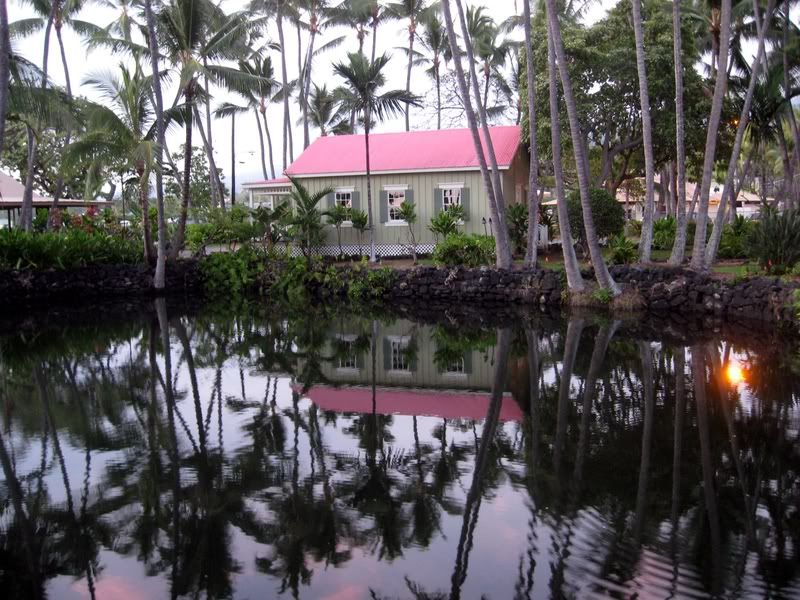
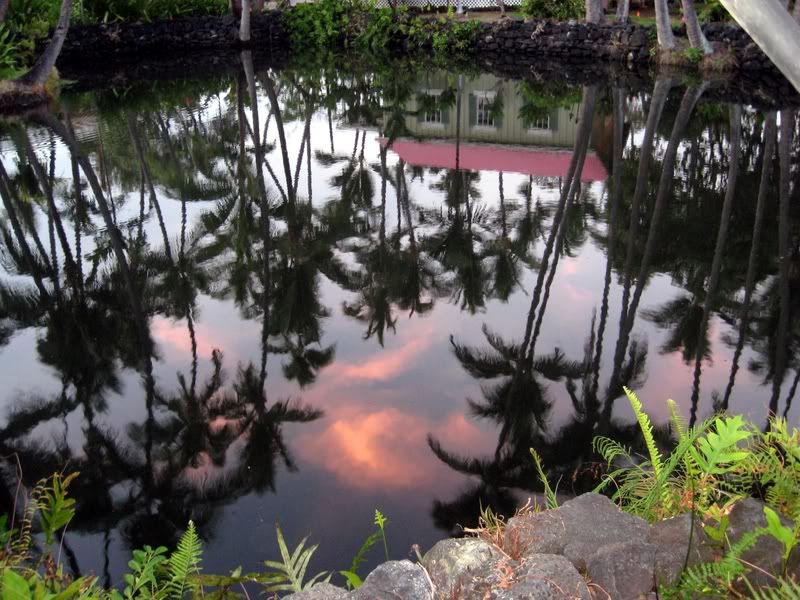
OC and I took a sunset stroll through the Keauhou Beach Resort gardens. We came upon a small pond surrounded by vegetation. I was looking for flora to photograph when the water caught my attention. In lieu of a tripod, I braced the camera on OC's shoulder, and took a couple of pics. They pretty much sum up the perfection that was today.


Our stroll through the gardens brought us face to face (okay, ankle) with a mongoose, two geckos, several birds, a couple of cats, and a huge variety of exotic plants and flowers. The beauty is breath-taking.


Kalakaua Cottage, a replica of the beach house of King David Kalakaua, which was built on this site but destroyed in the late 1950s. King David used to fish and swim in the tide pools OC and I are hoping to get a chance to snorkel in tomorrow. I understand Keauhou Beach is a natural honu habitat. If I'm lucky I'll get a photo.

Aloha!

Thursday, March 6, 2008

Hibiscus Cultivars

Once again I bring you a variety of my favorite non-scented flower.

Wednesday, January 9, 2008

Wet Diversity

As I've said, I adore Hawaii.


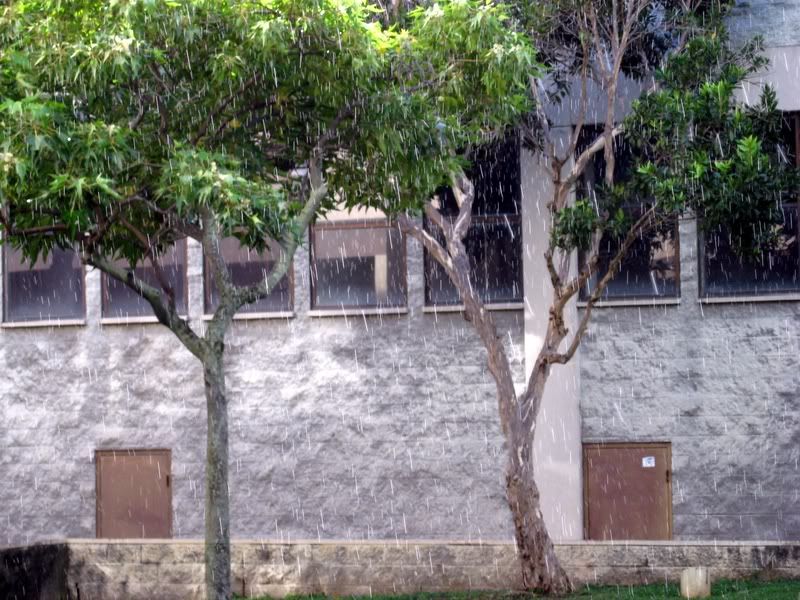
Here one can stand in the sunshine and the rain at the same time. I took this photo the other day at the University of Hawaii at Manoa. You can see the rain falling and the sun shining on the green leaves and the building beyond.


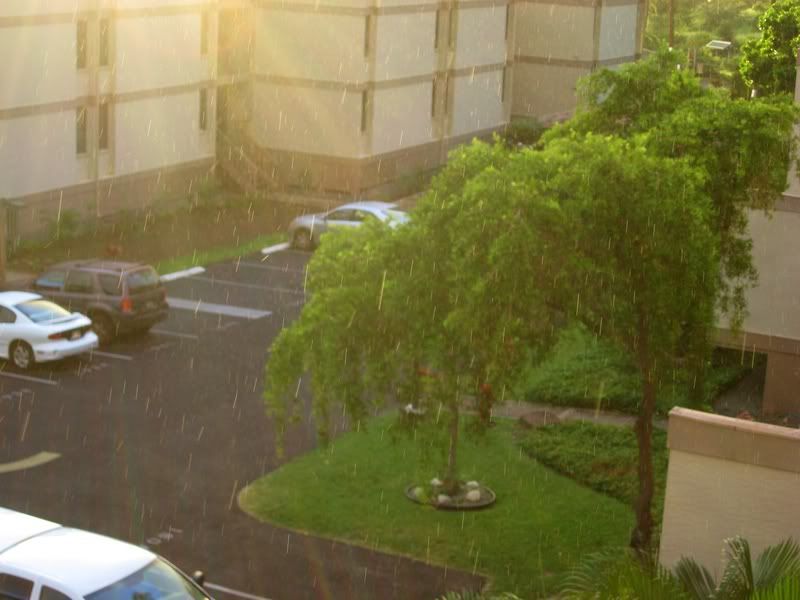
I took this picture from our lanai just before sunset on January 1st. You can actually see the rays of sunshine competing with the rain. I stepped outside and held out my hands. Rain fell into my right hand. My left hand remained dry. I was standing half in and half out of the rain shower. That is not an uncommon phenomena here in the Rainbow State — where liquid sunshine falls almost every day of the year.

The rain is warm and soft. Even so, we carry umbrellas with us every where we go. In a state with an almost constant humidity level of 80% or higher, once one’s clothing gets wet it tends to stay wet all day — and in air conditioned buildings that can get a bit uncomfortable.

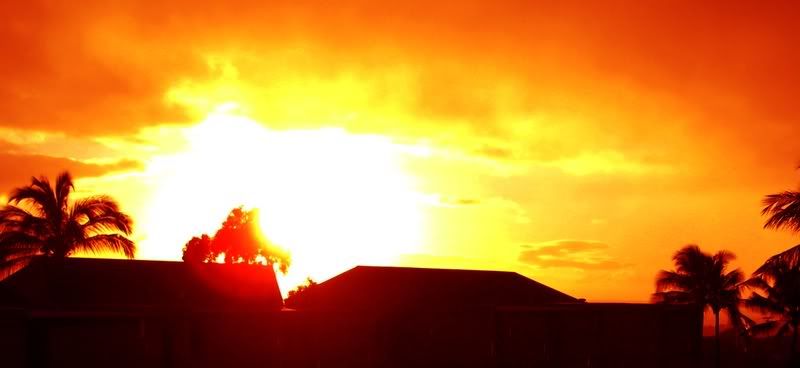
Oh, and that sunset photo?


Did I mention that I adore Hawaii?

Friday, December 21, 2007

Park Elves

Hawaii decorates for Christmas in a big way, with Honolulu Hale as a role model. Businesses bid for the honor of decorating sections of the Hale grounds. The snow family below, these elves, and several other attractions (photos will follow in the next several days) are sponsored by the auction winners.


These photos were taken at dusk in the rain -- well, drizzle -- which accounts in part for their poor quality. The other part would be my lack of expertise with any form of photography other than point-and-shoot.

Saturday, November 3, 2007

Local Flavor

Every Saturday morning the aroma drifts into my home from the neighbor's place. It's almost enough to make me want to go knock on their door and invite myself to breakfast. Fortunately, for the sake of my pride, I always keep a chub of Portuguese Brand Sausage in the freezer so that if my will power deserts me I don't have to go begging.

Despite its name, Portuguese Brand Sausage is made in Hawaii. It is also on the menu of many of the local restaurants, but don't get it in the restaurant. They'll only serve you three or four little slices. Go to the grocery store and pay about a $1.25 for a 5 ounce chub.


Portuguese Brand Sausage comes fully cooked with spicy ratings from mild, to medium, to hot. I buy the hot sausage because I have found that Hawaiian spices are much more mild then Mexican spices -- however, that doesn't mean their foods lack flavor or savor.

Try it. If you can't find any in your local supermarket pop on over to Hawaii and check the meat counter in most any store. It's certain to be on the shelf.


Btw, this is NOT a paid advertisement.

Saturday, October 13, 2007

Ma'ili Beach: Sand & Surf

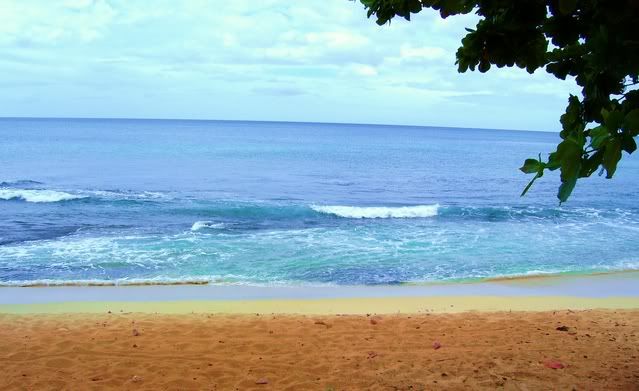
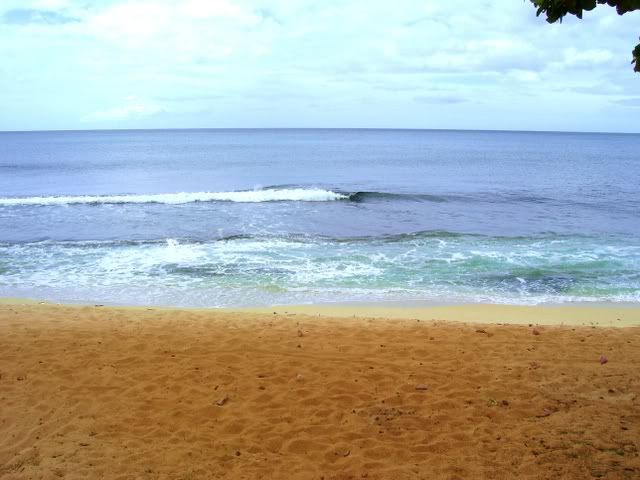
Ma'ili Beach is favored by both families and body surfers. It provides a safe place for little ones to learn to swim and a strong current with excellent waves. Although the two seem mutually exclusive, at Ma'ili Beach they are not.

Ma'ili beach has a sandstone shelf -- actually a smooth-topped limestone and coral reef -- that is perfect for teaching the little ones to swim because there is no shifting sand beneath their feet. Children can be taught the ways of water and waves on the reef before being introduced to the sandy section of the beach.

The sandstone and coral reef runs 100 yards along the shore line and extends 25 yards into the sea. The locals call this area, Tumbleland, because in many places the rocks are covered with slippery seaweed. Tumbleland is only exposed from April to November. The remainder of the year ocean currents keep the reef covered in sand.

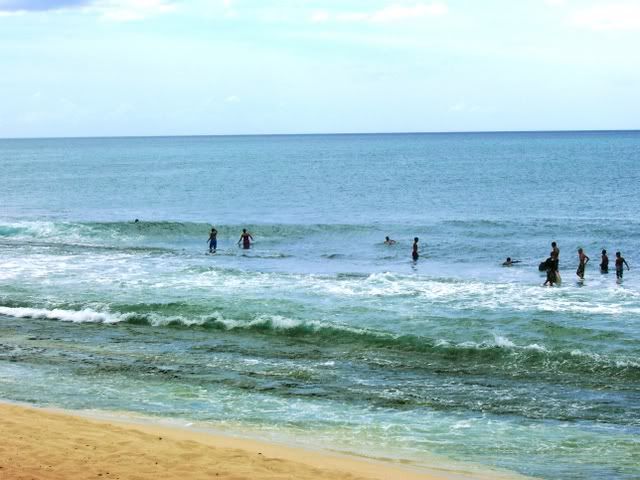
The surfers can be found at the edge of the reef, where there is a steep drop into the ocean. They paddle their boards from there out into the water and wait for a wave to ride back in. Surfing toward a huge rock doesn't make good sense to me, but the lifeguards assure me that the edge of the reef is very well padded in seaweed and there is rarely a serious injury, so for the most part their jobs are pretty boring (except for the sun, sand, and other scenery.)

This shot shows surfers standing at the edge of the reef. I am not adept with the camera. It is very slow to respond to button commands and I cannot anticipate when to press the dang button to get a shot of anybody riding a wave. Plus, I did not get any closer to the action because I was taking pictures of strangers and that just isn't a friendly or wise thing to do without first seeking permissions, so I wanted to make certain no one could be recognized.

I took these beach shots very early on a Wednesday morning while most of the beach goers were at work or school. The group of kids you see [above] are very young teens. The boys all wore matching t-shirts and arrived in a school bus with two coaches and a driver. Looks like a fun class to take.

More info about Ma'ili Beach Park can be found here: Little Pebbles; and Ma'ili Beach Park.

Monday, October 8, 2007

Ma'ili Beach Park

Farrington Highway is the main road on the leeward side of Oahu. From Ko'Olina west, the Farrington follows the coast. Along the paved portion of the Farrington there are 10 official (government maintained) public parks. Ma'ili Beach Park is one of the local favorites.

Ma'ili (ma-E-lee) Beach Park is often crowded on weekends. During the summer tents start popping up on Thursday afternoons and many remain until late Sunday or early Monday (permits are required, but they are free). Extended families often camp together. A big pavilion type tent will be surrounded by smaller personal tents. Assorted furniture is brought from home, often tables and folding chairs, but I've even seen easy chairs and recliners outside these temporary weekend villas.

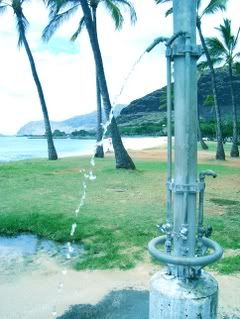
Ma'ili Park boasts picnic areas with tables, barbecue pits, public restrooms, and public showers. The showers are open air and their primary purpose is not for cleanliness, but for rinsing away sand and salt from skin and clothing. Some people get quite intimate with themselves while doing this and I was understandably startled by the number of people fondling themselves in public. The reason for such behavior was slow in making itself apparent.

My first encounter with the sand in Hawaii left me completely unprepared for its tenacity. Once the sand sticks to you it is there until forcibly removed. Unlike the sand of my childhood acquaintance, this stuff doesn't just fall off once it dries. OC says that is because it's coral and basaltic sand, not quartz sand. Some of the sand grains are bigger, they retain moisture longer (looks dry; isn't) and may have rougher edges then quartz sand. The showers help remove the sand (sort of).

The first time I went to the beach I wore a swim maillot -- one piece, form fitting -- and a t-shirt to protect me from the sun. After swimming I quickly rinsed in the outdoor shower, then went home to discover a good three-quarters of the beach had secreted itself away inside my swimsuit. The suit was a mess. I was a mess. The house was a mess.

The second time I went to the beach I wore very loose shorts and a t-shirt. When it came time to shower I reached right inside my clothes -- yes, in public -- and made certain the sand was dislodged from my skin. I had a much happier, sand-free homecoming and it was well worth the loss of a little dignity in the park.

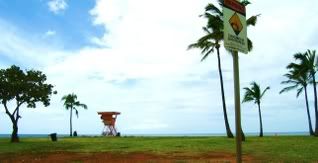
Maili Beach Park also has manned life guard stations. The beach is a popular place for family outings and body surfing. The life guards are quick to tell newcomers that the rocks are very slippery and the undertow is surprisingly strong. They also warn that one should never turn his back on the sea because the waves are unpredictable. Even so, Ma'ili is a favored beach for novice swimmers. I will explain why in my next post and supply you with beautiful photos of sand, surf and sea.


More info about Maili Beach Park can be found here: Little Pebbles.

Friday, October 5, 2007

Little Pebbles

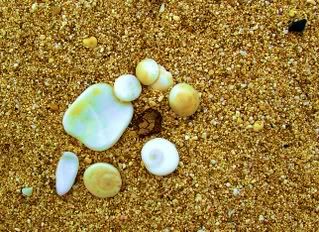
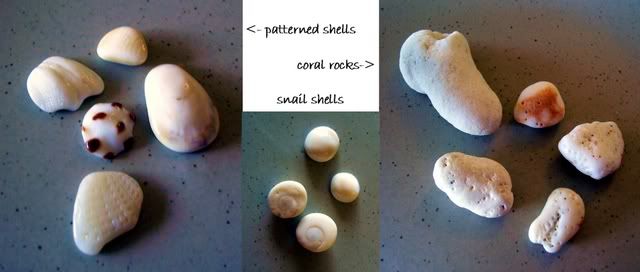
Ma'ili Beach got its name from the abundant, ma, little pebbles, ili'ili, in the area. The stones are naturally polished and smooth from rolling through the sand and surf. Many of the stones are polished bits of shell and coral. This is the beach you want to visit if you like finding trinkets from nature.

The "shell" stones are easily found. I gathered all of these within an arm's reach. If you look closely you can still see the swirls in the polished snail shells.


My favorite shells are the ones worn smooth by the sea. This summer when I was in Friday Harbor, Washington and in Canada on Vancouver Island, I had to hunt for them. At Ma’ili the beach seems to be made of them. I filled my pockets.

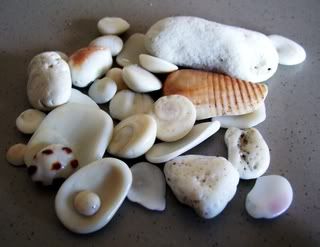
I didn't keep all of the shells I gathered, but choosing was hard! Each one has its own shape, texture and personality. The big red snail shell is tinted by red clay. The Ma’ili Park grounds that aren’t reef, shell or sand are red clay.

The big, white, porous rocks are coral. A reef hides beneath the shifting sands of Ma’ili Beach. Much of it is sand stone and it was exposed when OC and I visited. We found many fossils embedded in the rock. It was like walking on history.

Here's a closer look at my treasures ... (click picture for larger view)


Ma'ili Beach, Waianae, Ohau, Hawaii

Wednesday, October 3, 2007

Celebrating 70 Years of Aloha

Happy birthday to you,
Happy birthday dear Spam,
Happy birthday to you!

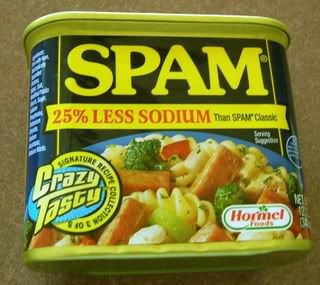
Yep, you heard me correctly. Today is the 70th Birthday of Spam canned luncheon meat. OC called me from work to tell me he'd read about it on the front page of the paper during his morning commute. I teased him a bit and promised him I would go to the store and get him some Spam for dinner. He demurred, but encouraged me to read his post.

Me being me -- upon being told the tribute to Spam never made it online -- I of course had to check. I did not find the birthday tribute, but I did discover that Hawaii leads the nation in per capita Spam consumption! Well, that did it. I had to go to the store and buy a can of Spam. I haven't had the stuff since I was a teen, maybe in the last several (okay, several dozen) years or so, it has gotten tastier.

Once in the store I was shocked to discover that Spam is no longer a single entity, but has grown into a whole family of products! The second shock was the number of people crammed into the canned lunch-meat isle. They were all buying Spam. One woman told me she was making Spam Chili. Another woman -- this one in line with me at the check-out counter -- told me that the 25% less sodium Spam, which I was purchasing, had 75% less taste. She said that once she took a can of it home and neither her husband nor the dog would eat it.

Since I have neither husband nor dog, I haven't quite decided what I am doing with the can of Spam sitting on my kitchen counter. Perhaps I will do what another shopper in the cash register line said she was going to do and put the Spam in my cupboard to save it for the 100 year anniversary. "By then," she said, "I might be senile enough to actually eat it."

Tuesday, October 2, 2007

Moving to Hawaii? Read This!

Matson did NOT solicit this testimonial and it is NOT a paid advertisement.

Moving is stressful. Pack it. Lift it. Carry it. Haul it. Remember which box it is in. Don't lose it. Don't break it. Savoring a new adventure is difficult when one is encumbered with stuff. That's why for my move to Hawaii I only kept my very best and more precious, or priceless possessions. Much of my stuff (clothing, books, photographs) I entrusted to the U.S. Postal Service and they did a fine job, however, they couldn't move my car.

I did an online search. The search engine presented me with several companies offering vehicle shipping. Only a handful would ship to Hawaii. I researched each of them and ended up choosing, West Point Relocation. They charged me $1295.00 to ship my car from the port in Seattle, WA to the Sand Island Terminal on Oahu. I was told it would take 25 days. It took 18.

The folks at West Point Relocation happily took my money over the phone (debit card) and gave me a delivery window for getting my car to the port in Seattle. They said they would send me an email with driving instructions. I never received it. I called them and told them it hadn't arrived. They apologized but did not resend. Nor did they give me several bits of crucial information -- like the fact that they weren't actually the ones shipping my car.

They did give me a street address for delivering my car, but the Seattle port businesses have dock numbers on their gates rather then street numbers, so I called West Point Relocation for more precise directions. They aren't actually in Seattle. The fellow on the phone had no idea what the dock number was. It took three phone calls (they hung up on me twice after keeping me on hold for over 15 minutes both times), semi-hysteria and tears before I was finally given the information that WPR doesn't actually move stuff, they just broker the moves. Finally they suggested I look for a Matson sign. That was the last time we spoke. WPR never even bothered to check to see if the move went well.

When I arrived at Matson -- near the end of my delivery window time -- the guard at the gate took one look at my tear stained face and greeted me with concern and care. The receptionist inside was just as wonderful -- even after she learned that I didn't have the invoice WPR should have emailed me, nor had I followed the preparation directions which I'd never received. Though it required more work on her part, she cheerfully looked up and printed the necessary papers, then helped me fill them out. The gate guard helped me gather my things from my car. (Nothing may be left inside. I had to empty the glove box and remove the cross hanging from my rear-view mirror.)

By the time I found the Matson office, I had lost all confidence in WPR, but the folks at Matson made me feel as though my car was safe. They even called a taxi for me and told me what directions to give the driver to ensure the shortest route to the airport.

The Matson staff in Hawaii was just as efficient and friendly when I collected my car. Not only that, I learned that had I dealt directly through them, and not used WPR, it would have only cost $975.00 to ship my car. Plus, about three days after I collected my car, someone from Matson called and asked if I was satisfied with their service.

Yes, as a matter of fact I was! The next time I have to move anything across the Pacific, I am calling Matson, first!

Thursday, September 27, 2007

Shower Tree

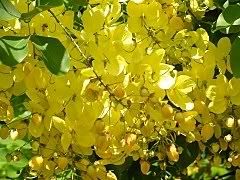
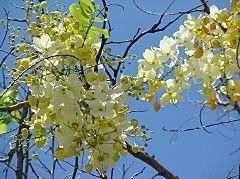
As I said before, much of the flora on Oahu is breathtaking. The Shower Tree is three of my favorites. (Don't get out your grammar checker, I wrote that correctly -- mostly.)

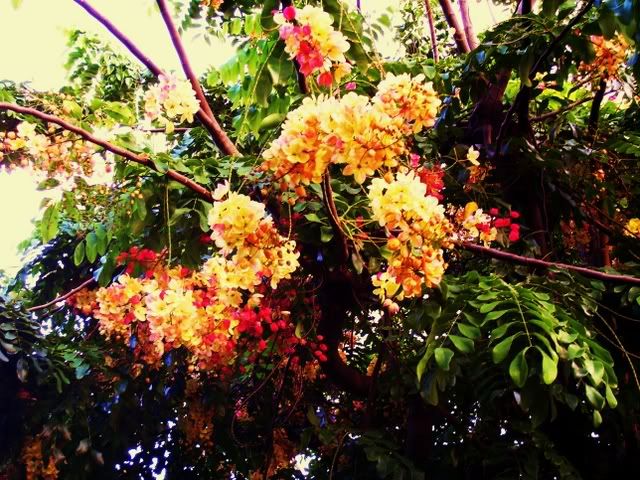
The Golden Shower Tree, [Cassia fistula], came to Hawaii via Indonesia. It produces huge clusters of bright yellow flowers. It is vibrant and captivating.


Pink Shower Tree [Cassia javanica], sometimes called the Coral Shower Tree, also came from Indonesia. This tree produces blossom clusters of soft pink to bright white flowers. It is an elegant and stately tree.


Rainbow Shower Tree [Cassia fistula x C. javanica], a sterile hybrid, originated in Hawaii from the cross pollination of it's Asian ancestors, Golden Shower Tree and Pink Shower Tree. The Rainbow Tree is bright, beautiful and elegant. It's blossoms range in hue from deep pink, to soft yellow, to snowy white.

Wednesday, September 26, 2007

The University of Hawaii at Manoa

I went to the UH campus at Manoa as a tourist, so I can only tell you what I saw:

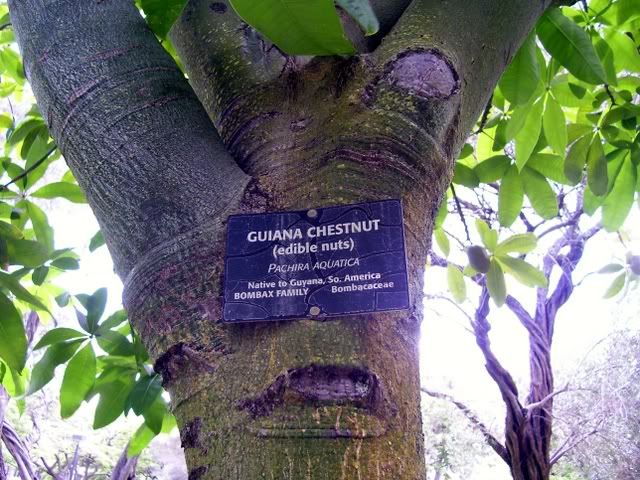
If chestnuts ....

Cultural Diversity: the campus is a mixing place. I saw a full palette of skin tones and heard a wide range of accents. In fact, I understand that the variety of language classes available on this campus exceeds all other public U.S. educational campuses. In addition, student apparel had more variety then most major department stores, and hair seemed to come in more colors then one finds in a crayon box.

. . . grow on Chestnut trees;

Architecture: like most campuses that have been around for awhile (UH@Manoa was founded in 1907) the buildings are a mix of old and new, but that is not the only difference in style. As is befitting such a diverse campus, the architecture of the buildings, plazas, gardens and statuary reflects the many cultures that converge here.

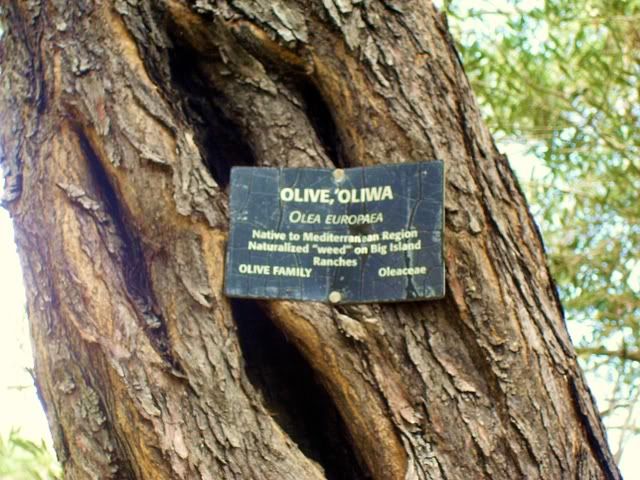
And olives . . .

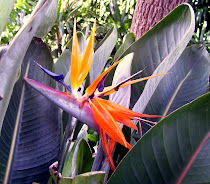
Flora: there are no words that can describe the wonderful trees and plants growing on the Manoa campus. I ate a tangerine warm from the sun picked from a campus tree. I saw plants (including the Bird of Paradise above) with as great a diversity of nationality and color as the students. The heady fragrance of all the different blossoms had me running from one plant to another to sniff.

. . . grow on Olive Trees;

Fauna: birds and cats co-exist on the campus. Most of the birds are tame. Most of the cats are not. (The links provide eloquent descriptions of each.)

Then what grows on Money Trees?

Parking: there is none. Security guards man the entrances. They will be happy to sell you a $3.00 pass to the guest parking lot, but as a friend told me, "It is only a license to hunt, not the guarantee of a parking place." On the plus side, if you give up searching for a parking place in less then 15 minutes and leave the campus, they will give you your money back. However, if you should park even half-an-inch from a designated guest parking place, you will receive a $15.00 ticket. Btw, the guest parking lot will hold maybe 50 cars and it is FULL from 7 a.m. to 4 p.m.

Ha! You wish! Not even in paradise.

Tuesday, September 25, 2007

Defining Aloha

Most likely you have been told that aloha means both hello and good-bye. That is a culturally limited misconception, and whomever started it robbed the word of much of it's depth and splendor. Aloha cannot be translated with words. As a haole (foreigner), I really have no business trying to convey this word, either; but I think I can do a better job of it then white-European history did.

My suspicion that aloha meant more then hello and good-bye was born on the flight to Hawaii. I was reading the airline magazine (hey, it's a long flight!) and there was an article on adoption Hawaiian- or aloha-style. The woman in the article said that she raised her adopted son "with aloha". That made no sense in light of what I thought I knew of the word. I kept reading.

From what I could gather from the article, the word aloha conveys love, acceptance, honor, eternal welcome .... and more. I came to realize that aloha is not a casual word, but one with great emotional significance. Still, I had only clues, and no real definition.

Over the next several days I heard "the spirit of aloha" referred to in many different, welcoming contexts. A commercial promised, "you will find aloha here." I have yet to visit the establishment which made the promise so I don't know if their statement is true, but somehow I doubt it. From what I have gathered, aloha is a feeling that emanates from one's heart. It is an expression of love, acceptance and belonging. It is personal, and cannot be packaged for sale and that means -- no matter what language we speak -- it is impossible to translate with words.

Further resources:

The Coconut Boyz Hawaiian (online) Dictionary

KaLeoAloha

Sunday, September 23, 2007

Breakfast On The Lanai


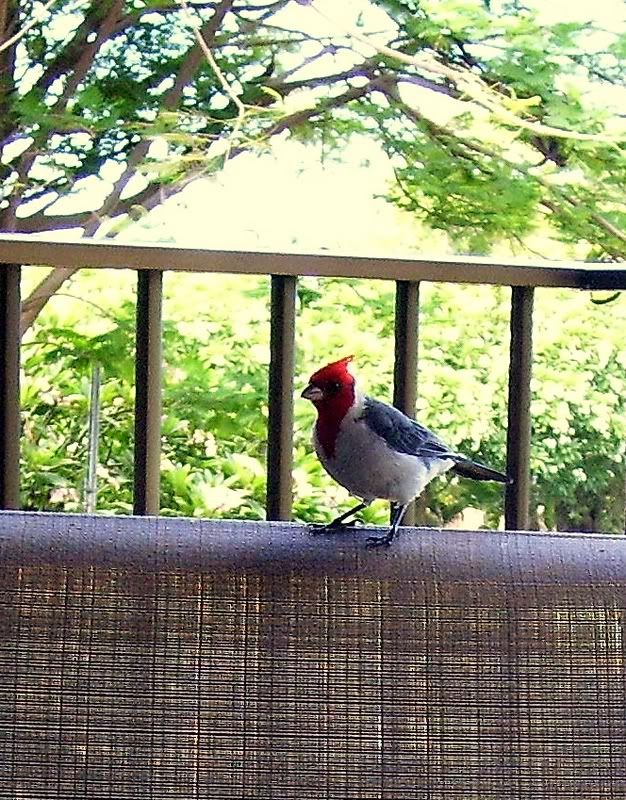
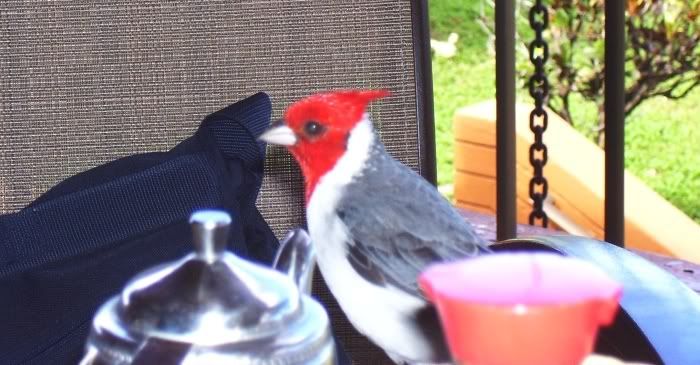
We ate many of our meals at the Makaha Resort. I especially enjoyed breakfast on the lanai. My favorite breakfast consisted of fruit juice, Portuguese sausage, pancakes, warm coconut syrup -- and Brazilian Cardinals.

No, the cardinals weren't for eating, they were for feeding -- or at least that's what they wanted us to believe.

This one came right to the table and sat down with us. It hopped from the back of the chair, to the table, to the top of the teapot. It had it's eye on the Portuguese sausage, but settled for a bit of pancake eaten from my partner's hand.

The cardinal wasn't in the least bit shy about asking for seconds -- and thirds. And he was quite spunky about letting his preferences be known.

"Hey, big guy, you're a bit stingy there with that coconut syrup, aren't you?"

Saturday, September 22, 2007

Makaha Resort

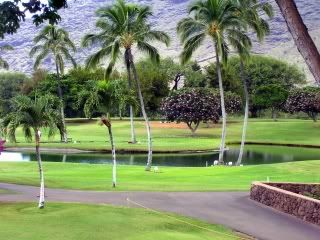
The Makaha Resort Golf Club labels itself, "Oahu's Hidden Secret", but this is a secret too good to keep quiet. The staff is efficient, courteous and unobtrusive. They materialize when you need them and disappear when you don't.

We found the resort through our favorite online travel site, and I would encourage you to do the same, however, before you book give the resort a call. You may be surprised by an even lower price. Remember that travel site has to make money, too. Sometimes their price is the lowest, but on average I save between $10.00 and $50.00 per reservation by bypassing the travel site and booking my own stays. (The advantage to the travel site is their guarantee that you will be housed should something go wrong. When you book your own stays you do not have that protection.)


Coming soon ... Breakfast on The Lanai.

Oahu


Blue sky.

Blue water.

Golden sand.

Oahu awaits.

Google


© New Blogger Templates | Make Money Online